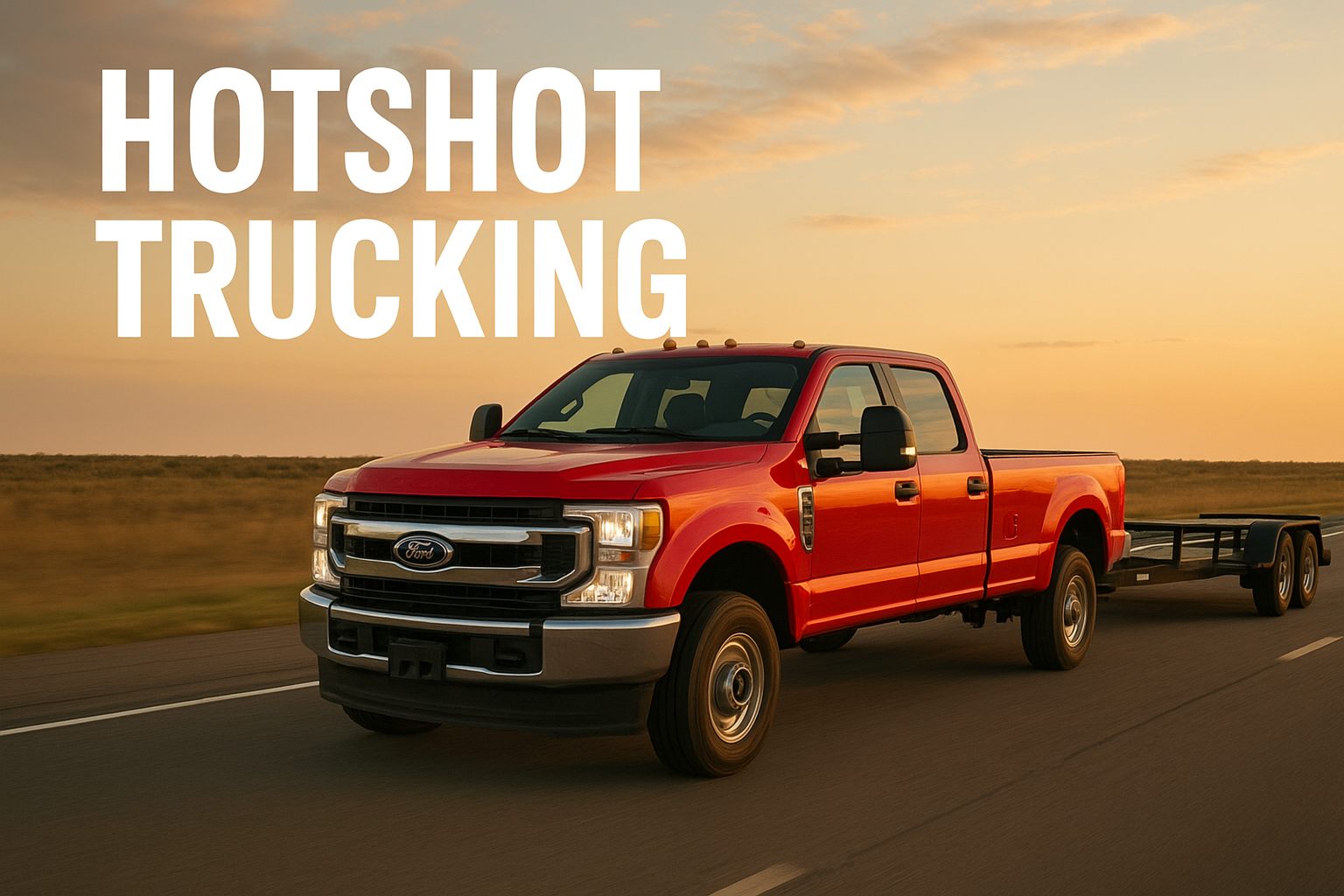
Hotshot Trucking: The Complete Beginner’s Guide to Starting and Making Money in 2025
If you’ve ever wondered whether hotshot trucking is still profitable—and how everyday people are getting into it without buying a semi—this guide will walk you through everything step-by-step. Whether you’re exploring new income streams or considering a full-time trucking business, hotshot trucking remains one of the fastest-entry transportation careers in 2025. This guide breaks it all down in a friendly, simple way so you can confidently decide if this opportunity is right for you.
What Exactly Is Hotshot Trucking?
Hotshot trucking is all about fast, last-minute loads delivered with a pickup truck and trailer instead of an 18-wheeler. It’s built for urgent freight—items that need to get from Point A to Point B quickly, without waiting for a full truckload. Because businesses rely on speed, hotshot drivers can earn strong rates with far less equipment than traditional trucking.
Basic Definition
Hotshot trucking is a form of expedited freight using Class 3, 4, or 5 pickup trucks paired with flatbed trailers. Instead of hauling massive loads like semis, hotshot drivers carry smaller, time-sensitive freight for industries that can’t wait. Think construction companies needing materials today, machinery that needs to be delivered by morning, or equipment breakdowns requiring an immediate replacement part.
How Hotshot Trucking Works
The process is surprisingly easy to understand once you see how loads go from a shipper to your trailer. A business calls a broker or load board to request a quick delivery. The broker posts the load online, a driver accepts it, picks it up, secures it, and delivers directly—usually within hours. There are no terminals, no warehouses, and no complicated logistics. Just fast, direct hauling.
Hotshot vs. Regular Trucking
While they share similarities, hotshot trucking is often faster, more flexible, and generally easier to start than traditional semi-truck driving. Hotshot drivers use smaller trucks, pay significantly less for insurance and equipment, and enjoy more informal operations. However, they also deal with fluctuating loads, inconsistent routes, and self-managed business responsibilities. The freedom is appealing—but it comes with responsibility.
Is Hotshot Trucking Profitable in 2025?
The short answer is yes—hotshot trucking can be very profitable, especially for independent drivers willing to hustle, maintain their equipment, and secure consistent loads. But like any business, the numbers only work if you run it smart.
Average Pay Per Mile
Hotshot drivers typically earn between $1.50 and $3.50 per loaded mile, depending on region, urgency, and type of freight. Emergency loads or high-risk items can bring even higher rates—sometimes $4.00 to $6.00 per mile.
Average Weekly and Annual Income
Most hotshot drivers make far more than people expect once they get consistent loads and learn to avoid deadhead miles. National averages show:
- Weekly Gross: $4,000–$6,000
- High Performers: $7,000–$10,000+
- Annual Gross: $180,000–$250,000+
After expenses, owner-operators typically net $1,000–$2,500 per week, depending on how lean their operation runs.
Profit Margin Breakdown
Your profit depends on how well you manage fuel, insurance, and maintenance—the three biggest costs. Because hotshot rigs are lighter and more fuel-efficient than semi-trucks, many drivers maintain a healthier profit margin. However, success also depends on minimizing empty miles, negotiating good rates, and staying in high-demand lanes.
What Loads Do Hotshot Truckers Haul?
One of the reasons hotshot trucking stays in demand is because many industries depend on quick deliveries that semis simply can’t handle. From construction to farms to manufacturing plants, hotshot drivers rescue urgent situations every day.
Most Common Hotshot Loads
- Construction materials (lumber, steel, pipes)
- Farm and agricultural equipment
- Oilfield parts and pipeline materials
- Small vehicles, ATVs, or golf carts
- LTL (partial) freight
- Machinery needing same-day replacement
Highest Paying Hotshot Loads
If you want to maximize earnings, specializing in certain freight types can dramatically increase your pay. The highest-paying loads typically include:
- Construction rush orders
- Oilfield machinery
- Oversized hotshot-legal loads
- Hazmat materials (with certification)
These loads often come with strict deadlines—which means higher rates.
What You Need to Start Hotshot Trucking
Starting a hotshot business may look complicated at first, but once you understand the list of requirements, it becomes a straightforward step-by-step process.
Required Equipment
At minimum, you’ll need the following:
- Pickup Truck: A 1-ton diesel such as an F-350, Ram 3500, or GMC 3500.
- Trailer: Gooseneck or bumper pull flatbed.
- Securement Gear: Chains, straps, binders, corner protectors, tarps.
Legal Requirements
Before you haul your first load, you’ll need several documents to stay compliant and avoid penalties:
- USDOT number
- MC authority (if crossing state lines)
- Commercial insurance (cargo, liability, physical damage)
- Driver medical card
- Drug testing enrollment
- ELD (if required by your setup)
Optional but Helpful Tools
While not required, these tools make your business smoother:
- Dedicated GPS for trucks
- Load board subscriptions
- Business credit cards
- Accounting software for tax tracking
Startup Costs: How Much Does It Really Take to Begin?
Before you spend anything, it’s important to understand what it truly costs to launch a hotshot business the right way.
Cost Breakdown
- Truck: $25,000–$70,000
- Trailer: $7,000–$20,000
- Commercial Insurance: $1,000–$2,500/month
- Authority Setup: $300–$1,000
- Gear & Securement: $500–$2,000
- ELD System: $200–$600
Cheapest Way to Get Started
You don’t need the newest truck on the market. Many new drivers start with:
- A reliable used diesel truck
- A bumper-pull trailer (cheaper than gooseneck)
- Self-filing their DOT and MC paperwork
This approach dramatically reduces startup costs while still allowing you to make strong income.
How to Find Hotshot Loads (Beginners’ Roadmap)
Finding consistent loads is the make-or-break factor for new hotshot drivers—but the good news is you have several reliable options.
Using Load Boards
Load boards connect you with brokers and shippers instantly. The most popular platforms are:
- DAT Load Board
- Truckstop
- 123Loadboard
These services let you browse loads, compare pay, and negotiate directly with brokers.
Working With Brokers
Brokers can help fill your schedule quickly, especially in your first 90 days when you haven’t built relationships yet. They look for reliability, timely communication, and proper paperwork. Professional drivers who maintain good relationships often get access to better-paying loads.
Getting Direct Shippers
This is where the real money is. Direct shippers—contractors, manufacturing plants, local businesses—offer higher rates and steady work without middleman fees. Building trust by showing up on time and delivering damage-free loads is the fastest path to maxing out income.
How Much Can You Really Make? (Profit Examples)
To give you clearer expectations, let’s break down what a typical full-time week might look like for a hotshot driver.
Sample Weekly Breakdown
- 3,000 miles driven
- $6,000 gross revenue
- $3,500 in expenses (fuel, insurance, maintenance, tolls)
- $2,000–$2,500 net profit
Of course, numbers vary, but this example represents a strong and realistic scenario for a dedicated driver.
Part-Time Hotshot Earnings
If you don’t want to drive full-time, you can still make steady part-time income with local or weekend loads. Many part-timers work within a single state and avoid the more expensive insurance requirements of interstate operations.
Why Some Drivers Make $150K+ and Others Don’t
Success often comes down to:
- Choosing profitable lanes
- Reducing deadhead miles
- Maintaining low truck payments
- Building direct relationships over relying solely on load boards
- Managing expenses like a business owner
Common Mistakes New Hotshot Drivers Make
Avoiding beginner mistakes can save thousands and dramatically improve your long-term success.
Buying Too Much Truck
Many newcomers buy expensive, high-end trucks with massive payments. This kills profit. Start with something reliable but reasonable—you can always upgrade later.
Running Too Much Deadhead
Driving empty miles kills your profit faster than anything else in hotshot trucking. Always plan return loads or position yourself in high-demand areas to minimize empty travel.
Not Understanding Insurance Costs
Insurance is one of the biggest recurring costs, and many new drivers underestimate it. Shopping around and maintaining clean driving records keeps rates manageable.
No Business Plan
Hotshot trucking is a business, not a hobby. Without a plan for expenses, maintenance, and marketing, even strong weekly revenue can disappear quickly.
How to Succeed Long-Term in Hotshot Trucking
The hotshot drivers who make the most money aren’t the ones working the hardest—they’re the ones working the smartest.
Build Direct Relationships
Direct shippers provide the best rates, easiest communication, and most consistent work. One solid client can turn your entire business into a stable six-figure income stream.
Stay Loaded, Not Busy
The goal isn’t to drive more miles—the goal is to drive more paying miles. Monitoring your load board carefully, choosing high-paying freight, and planning efficient routes all contribute to higher net profit.
Maintain Your Truck Religiously
Hotshot trucks run hard. Oil changes, filters, tires, and brakes need frequent attention. A breakdown on the highway doesn’t just cost you repairs—you also lose load income, deadlines, and reputation.
Is Hotshot Trucking Right for You?
By now, you should have a clear picture of what hotshot trucking looks like day-to-day—from the income to the workload to the startup costs. The real question is whether the lifestyle and responsibilities fit your goals.
Lifestyle Fit
Hotshot trucking offers flexibility, independence, and the freedom to set your schedule. But it also requires long hours, road time, and sometimes being away from home for several days.
Financial Fit
If you manage expenses well and build good habits early, the financial upside of hotshot trucking is impressive. Many drivers turn this into a full-time career and a profitable business that grows year after year.
Conclusion
Hotshot trucking can be a powerful way to earn real money, enjoy independence, and build a flexible business that fits your lifestyle. Like any opportunity, success depends on preparation, strategy, and smart decision-making. Whether you’re exploring part-time or full-time options, the road ahead is full of possibility if you approach it with a clear plan and a willingness to learn.
FAQ
Do I need a CDL for hotshot trucking?
Not always. If your total combined vehicle weight rating (truck + trailer) exceeds 26,000 lbs, you’ll need a CDL. Many hotshot setups stay under this limit to avoid requiring one.
How much does hotshot insurance cost?
Insurance usually ranges from $1,000–$2,500 per month depending on your state, driving record, cargo type, and truck value.
How fast can I start a hotshot business?
If you already have a truck and trailer, you can be up and running within 2–4 weeks after filing for DOT and MC authority and activating insurance.
What’s the best truck for hotshot trucking?
Most drivers prefer diesel 1-ton trucks like the Ford F-350, Ram 3500, or GMC 3500 because of their towing capacity, durability, and fuel efficiency.
Do hotshot drivers get home daily?
It depends. Local drivers may return home nightly, while OTR drivers may spend several days on the road to maximize revenue.