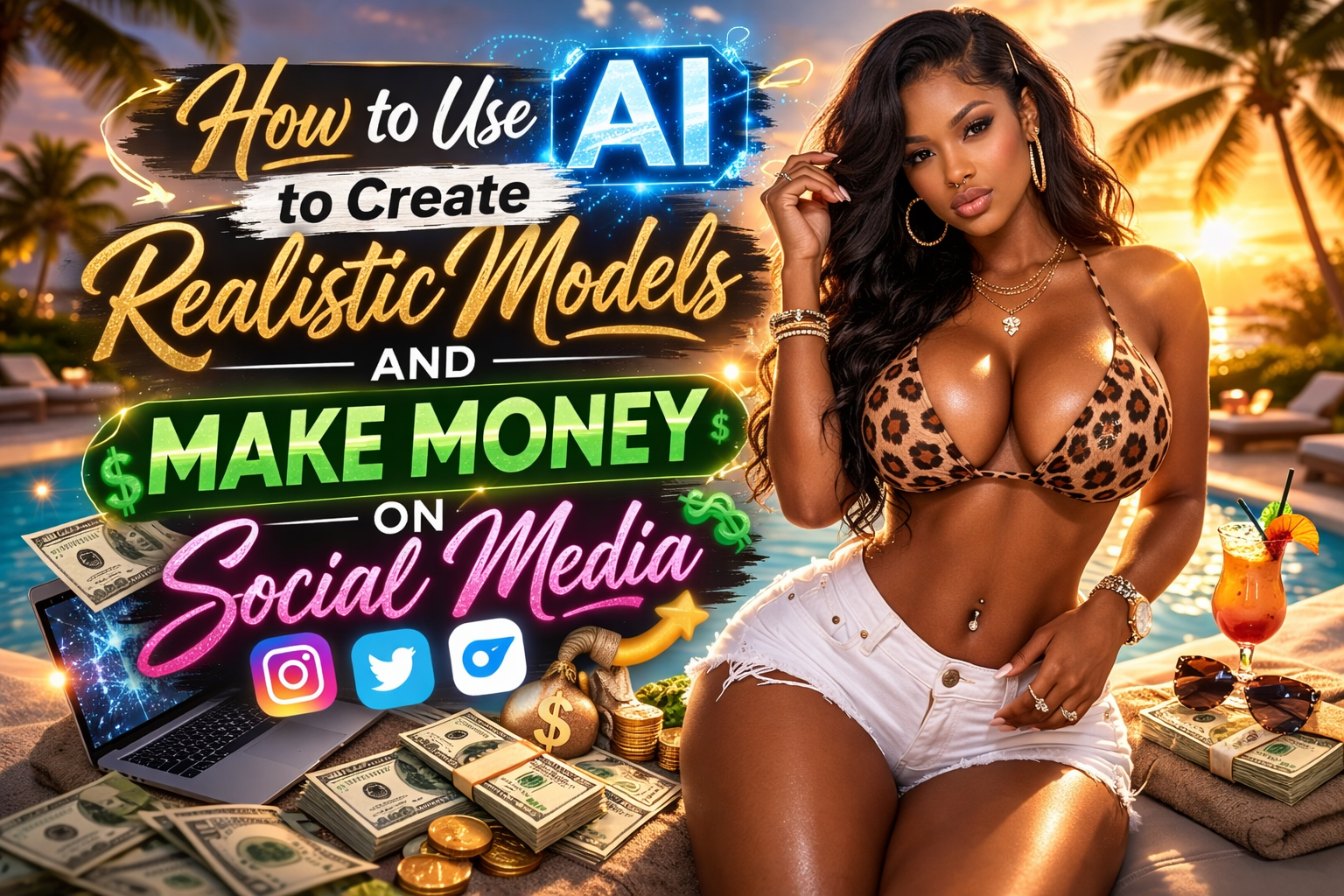
If you’ve spent any time on social media lately, you may have noticed something interesting. Some of the most engaging, polished, and eye-catching “people” online aren’t people at all. They’re AI-generated models—and they’re quietly turning likes, comments, and followers into real income.
This isn’t science fiction or a short-lived gimmick. It’s a fast-growing digital business model that blends creativity, branding, and smart monetization. Best of all, you don’t need to be a photographer, influencer, or tech expert to get started. With the right approach, AI models can become powerful digital assets that work for you around the clock.
In this guide, we’ll break down exactly how AI-generated realistic models work, why they perform so well on social media, and how people are monetizing them across multiple platforms—ethically, legally, and strategically.
What Are AI-Generated Realistic Models?
AI-generated realistic models are digital humans created using artificial intelligence trained on massive image datasets. With the right prompts and refinement, these models can look nearly indistinguishable from real people.
Instead of hiring a model, scheduling photo shoots, or managing logistics, creators generate images on demand. Every pose, outfit, environment, and expression is controlled digitally, giving you complete creative freedom.
How AI Image Generation Works (Without the Tech Jargon)
At its core, AI image generation works by translating text descriptions into visuals. You describe what you want—appearance, mood, clothing, background—and the AI produces an image that matches those details.
Modern AI tools have become exceptionally good at realism. Skin texture, lighting, facial symmetry, and natural poses are now standard rather than rare. This leap in quality is what makes AI models viable for social media and monetization.
Why These Models Feel So Real
Realism comes from consistency. When creators maintain the same facial features, body type, and aesthetic across images, the AI model starts to feel like a real person with a recognizable identity.
Pair that with human-like captions, engagement in comments, and a clear personality, and followers often forget they’re interacting with a virtual creation.
Why AI Models Are a Real Online Business Opportunity
AI-generated models aren’t just a novelty—they’re a response to how social media and online business have evolved.
Audiences crave visually appealing content, consistency, and entertainment. AI models deliver all three without the limitations that come with traditional influencer marketing.
Low Overhead, High Flexibility
One of the biggest advantages of AI models is cost efficiency. There’s no need for cameras, studios, makeup artists, or travel. Once you learn the tools, your primary investment is time and creativity.
You can generate content at any hour, test different styles quickly, and adapt based on what your audience responds to.
Scalability Without Burnout
Unlike human creators, AI models don’t get tired. You can scale content production, run multiple accounts, or even create multiple personas without increasing workload proportionally.
This scalability is what turns a creative experiment into a legitimate digital business.
Choosing the Right Niche for Your AI Model
Success with AI models starts with clarity. The most profitable creators don’t generate random images—they build models with a specific audience in mind.
Popular Niches That Perform Well
- Lifestyle and everyday aesthetics
- Fashion and outfit inspiration
- Fitness and wellness
- Luxury, travel, and aspirational content
- Adult-oriented platforms (used responsibly and transparently)
Each niche attracts different followers and monetization opportunities, so choose one that aligns with your comfort level and long-term goals.
Creating a Personality, Not Just a Face
The most successful AI models have a backstory. Giving your model a name, tone of voice, and consistent personality helps followers connect emotionally.
Think of your AI model as a brand. What does it stand for? What lifestyle does it represent? These details shape everything from captions to visuals.
Tools You Need to Create Realistic AI Models
Getting started doesn’t require advanced technical skills. Many modern AI tools are designed for everyday users.
AI Image Generation Platforms
Most creators begin with text-to-image generators that allow detailed prompts. Over time, some choose to train custom models for even greater consistency.
The key is experimentation. Test different prompts, lighting descriptions, and poses until you find a style that feels natural and repeatable.
Editing and Enhancement Tools
Light editing can dramatically improve realism. Simple adjustments like sharpening, color correction, and background cleanup can elevate your images from good to professional.
The goal isn’t perfection—it’s believability.
Creating Content That Stops the Scroll
Visuals may grab attention, but content strategy keeps followers coming back.
Image Types That Perform Well
- Close-up portraits for connection
- Lifestyle scenes for storytelling
- Casual, everyday moments
- Occasional polished or high-fashion shots
Mixing content styles keeps your feed dynamic while reinforcing the same identity.
Writing Captions That Feel Human
Captions are where realism truly comes alive. Use conversational language, ask questions, and share “thoughts” that fit your model’s persona.
Engagement grows when followers feel acknowledged, so responding to comments and messages is essential.
Where and How AI Models Make Money
Monetization works best when it feels natural rather than forced.
Social Platforms for Growth
Mainstream social platforms are ideal for building visibility and directing traffic. The goal here is audience growth, not immediate sales.
Subscription and Exclusive Content Platforms
Subscription-based platforms allow creators to offer exclusive content, deeper interaction, or premium experiences. Transparency and compliance with platform rules are critical.
Additional Monetization Options
- Affiliate marketing
- Brand collaborations
- Digital products or memberships
Diversifying income streams protects you from platform changes and keeps revenue stable.
Understanding the Business Model Behind AI Influencers
AI models follow the same fundamentals as human influencers: attention leads to trust, and trust leads to monetization.
Free content builds awareness, premium offerings deepen relationships, and consistency compounds growth over time.
Legal and Ethical Considerations You Shouldn’t Ignore
Responsible creators protect themselves by following platform rules and ethical standards.
Transparency Matters
While you don’t need to highlight the AI aspect constantly, honesty builds long-term trust and reduces risk.
Originality and Likeness Protection
Avoid creating models that closely resemble real individuals. Original designs not only protect you legally but also strengthen your brand.
Scaling Your AI Model Into a Digital Asset Portfolio
Once you master one model, expansion becomes strategic rather than overwhelming.
You can create additional personas, explore new niches, or outsource tasks like caption writing and scheduling.
This shift—from creator to operator—is where long-term income potential truly opens up.
Common Mistakes Beginners Make
Many beginners focus too much on image perfection and not enough on branding and consistency.
Others post without a plan, ignore engagement, or expect instant results. Treating this like a business—not a shortcut—is the key difference.
Conclusion: Is Building AI Models for Social Media Worth It?
AI-generated realistic models represent a unique intersection of creativity and opportunity. They lower barriers to entry while offering scalability that traditional content creation can’t match.
If you’re willing to learn, experiment, and stay consistent, AI models can become valuable digital assets that grow over time. The tools are here. The audience is ready. The next move is yours.
Bonus: How to Use AI to Sell Feet Pics on OnlyFans

Looking to explore a niche that consistently earns online? Selling feet pictures has become a surprisingly profitable market on platforms like OnlyFans. With AI, you can create high-quality, realistic images without ever showing your real feet. Here’s how to get started safely and strategically.
Step 1: Define Your Brand and Style
Even for niche content, branding matters. Decide on a persona for your AI model:
- Skin tone, nail polish style, or accessories like anklets or toe rings.
- Footwear or barefoot shots—consistency helps followers recognize your style.
- Personality and captions—playful, luxurious, or casual.
Step 2: Generate Images Using AI
You can use AI tools like ChatGPT with image generation plugins or other AI image platforms. Here’s a workflow:
- Write a detailed prompt describing the foot image. Include:
- Foot pose (e.g., side profile, top-down, close-up)
- Skin tone and texture
- Nail color or accessories
- Background style (plain, textured, or lifestyle environment)
- Generate multiple variations to select the most realistic and appealing images.
- Edit for quality and consistency using tools like Photoshop or online image enhancers.
Step 3: Set Up Your OnlyFans Account
Once your images are ready, it’s time to monetize:
- Sign up for OnlyFans and complete identity verification.
- Create your profile with a catchy username and appealing bio.
- Upload AI-generated images and organize them into categories or albums.
- Set subscription rates based on your target audience and content volume.
Step 4: Engage and Grow Your Audience
AI images alone won’t sell without engagement:
- Post teasers on social media platforms like Instagram, Twitter/X, or Reddit (where permitted).
- Respond to messages and comments to maintain interest and loyalty.
- Offer exclusive content, bundles, or personalized images for premium subscribers.
Step 5: Track, Adjust, and Scale
Like any online business, monitoring performance is key:
- Track subscriber growth and engagement rates.
- Test different image styles, poses, and captions.
- Scale by creating multiple AI foot models or branching into related niche content.
By combining creativity, AI tools, and a consistent posting strategy, you can build a profitable niche business selling AI-generated feet pictures safely and professionally on OnlyFans.
Frequently Asked Questions
Is it legal to make money with AI-generated models?
Yes, as long as you follow platform rules, avoid using real people’s likenesses, and comply with applicable laws and disclosures.
Do followers care if the model is AI?
Most followers care more about content quality and engagement. Transparency builds trust, but realism and personality drive interest.
How long does it take to make money?
Some creators see small earnings within weeks, while others take months. Consistency and niche clarity matter more than speed.
Do I need technical skills to start?
No. Many tools are beginner-friendly. Learning prompt writing and basic editing is usually enough.
Can this be done as a side hustle?
Absolutely. Many people start part-time and scale once they see traction.