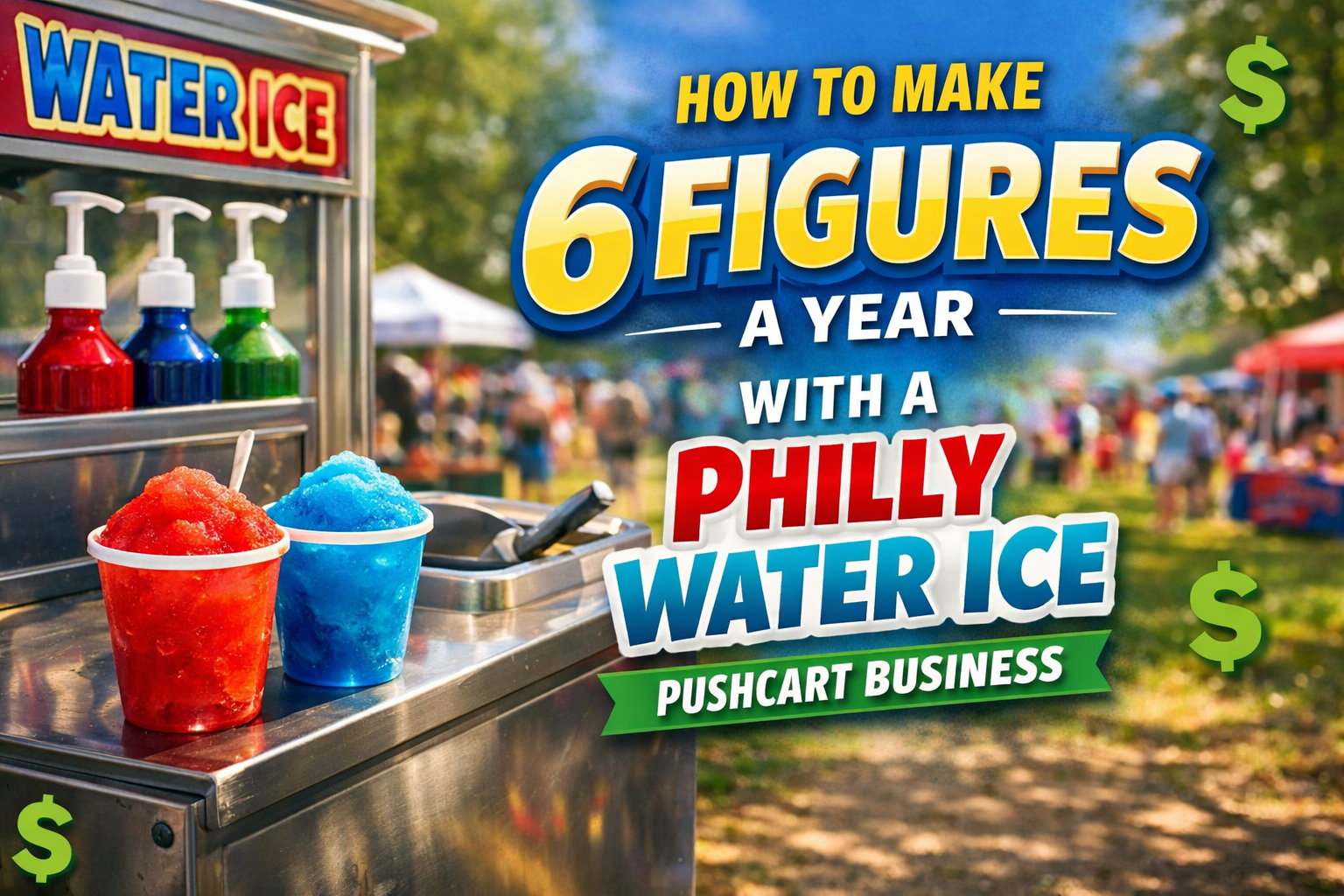
On a hot summer day, few things sell faster than a cold cup of Philly water ice. People don’t overthink it. They’re hot, they’re thirsty, and they want relief now. That simple moment of impulse is exactly why a Philly water ice pushcart business can quietly turn into a six-figure operation.
This isn’t a get-rich-quick idea or a social media fantasy. It’s a low-cost, high-margin, cash-flow business that’s been working for decades—often run by families, side hustlers, and everyday entrepreneurs who understand one thing: volume plus consistency equals serious money.
In this guide, you’ll learn exactly how a Philly water ice pushcart business works, what it really costs to start, how the math behind six figures plays out, and how to scale without burning yourself out.
Why Philly Water Ice Is a Hidden Business Goldmine
Philly water ice isn’t just another frozen dessert—it’s a cultural staple. When temperatures rise, demand skyrockets, and unlike many food businesses, there’s no convincing required. Customers already want what you’re selling.
What makes this business special is its simplicity. You’re selling a product with low ingredient costs, fast service time, and broad appeal across kids, adults, and families. Combine that with mobility and minimal overhead, and you’ve got a business model that punches far above its weight.
Understanding the Philly Water Ice Pushcart Business Model
Before you think about profits, you need to understand how this business actually operates day to day. The beauty is in its repeatable simplicity.
What Exactly Is Philly Water Ice?
Philly water ice is smoother than shaved ice and lighter than ice cream. It’s made from water, sugar, and flavored syrups, frozen into a soft, scoopable consistency. The flavors are bold, the texture is refreshing, and the appeal is universal.
Because it’s dairy-free, it appeals to a wider audience, including people who avoid ice cream. That alone increases your potential customer base.
Why Pushcarts Beat Brick-and-Mortar Shops
A traditional shop comes with rent, utilities, long leases, and staffing headaches. A pushcart doesn’t. You go where the people are, when the demand is highest.
With a pushcart, you can:
- Operate during peak hours only
- Move locations if traffic slows
- Avoid long-term financial commitments
- Start small and scale gradually
This flexibility is what allows many vendors to earn more than small storefronts with a fraction of the stress.
Startup Costs: What It Really Takes to Get Started
One of the biggest myths about starting a business is that you need a lot of money. A Philly water ice pushcart proves otherwise.
Pushcart and Equipment Essentials
Your biggest upfront expense is the cart itself. Depending on whether you buy new or used, costs vary, but you’re typically looking at a manageable range.
Basic equipment includes:
- A professional water ice pushcart with freezer
- Storage containers for multiple flavors
- Cups, spoons, napkins, and lids
- Bright signage with clear pricing
Once purchased, this equipment can be used for years, making it a long-term investment.
Ingredients and Inventory Costs
The ingredient cost per cup is surprisingly low. Water, sugar, and syrup cost pennies per serving. Even with generous portions, your margins remain strong.
This means you can confidently sell at impulse-friendly prices while still maintaining excellent profit per cup.
Licenses, Permits, and Insurance
Like any food business, you’ll need basic permits and approvals. These vary by city, but they’re generally affordable and straightforward.
If you’re operating in or near :contentReference[oaicite:0]{index=0}, you’ll want to check local vending rules, health department requirements, and insurance needs. Many vendors find suburban or event-based vending even easier to start.
Choosing Locations That Turn Slow Days Into Big Paydays
Location is everything. The same cart can struggle on one block and thrive just two streets over.
High-Traffic Locations That Actually Work
The best locations share one thing in common: people are already there and already hot.
- Parks and playgrounds
- Tourist areas and waterfronts
- Sporting events and tournaments
- Festivals, fairs, and block parties
Anywhere families gather during warm weather is prime territory.
Timing, Weather, and Daily Strategy
Hot days create lines. Warm evenings create repeat customers. Weekends can outperform weekdays by a wide margin.
Smart vendors adjust hours based on weather forecasts and local events, maximizing sales without working unnecessary hours.
The Pricing Strategy That Makes Six Figures Possible
Six figures doesn’t come from luck—it comes from simple math done consistently.
Understanding Cost Per Cup
When your cost per cup is low and your selling price is reasonable, every sale adds up quickly. Even modest pricing creates strong margins when volume increases.
Pricing Without Scaring Customers Away
Customers expect to pay more at events and busy locations. Clear pricing and visible portions build trust and speed up decision-making.
Offering multiple sizes and bundle deals increases average order value without extra effort.
How a Water Ice Pushcart Can Reach $100,000 a Year
This is where it all comes together.
If you sell a few hundred cups on a busy day—and many vendors do—that revenue compounds fast across weekends, events, and peak months.
The key is consistency, not perfection. You don’t need record-breaking days every time. You need repeatable, predictable sales.
Marketing That Costs Little but Works Big
You don’t need ads when your product sells itself.
Visual Branding That Pulls People In
Bright colors, clear signage, and visible flavors attract attention from a distance. A clean, friendly setup builds instant trust.
Word-of-Mouth and Repeat Customers
Kids remember flavors. Parents remember convenience. Happy customers bring friends.
Social media photos, local shoutouts, and community events turn one-time buyers into regulars.
Scaling Beyond One Cart
One cart can generate great income. Multiple income streams create stability.
Many operators expand by adding carts, hiring part-time help, or focusing on high-paying events and catering.
The business scales because the product and process stay the same.
Common Mistakes That Limit Profits
Most failures come from avoidable mistakes:
- Poor location choices
- Underpricing products
- Running out of inventory on busy days
- Ignoring permits and rules
- Not tracking daily sales
Staying organized and adaptable solves most of these issues.
Who This Business Is Perfect For
This business works especially well for:
- Side hustlers looking for cash flow
- Families wanting seasonal income
- Entrepreneurs tired of high overhead
- Anyone who wants a simple, proven model
Frequently Asked Questions
Can you really make six figures with a water ice pushcart?
Yes, with consistent locations, event bookings, and smart pricing, many vendors reach or exceed six figures during strong seasons.
How long does it take to break even?
Many operators recoup startup costs within the first season, sometimes within weeks during peak summer months.
Is this business seasonal?
Primarily, yes—but events, catering, and pop-ups can extend income beyond summer.
Do I need employees?
Not at first. Many owners operate solo and add help only when scaling.
Is Philly water ice hard to make?
No. Once you learn the process, it’s simple and repeatable.
Conclusion: A Simple Business With Serious Upside
A Philly water ice pushcart business proves that you don’t need complexity to make real money. With low startup costs, strong demand, and simple operations, it’s one of the smartest small businesses for anyone willing to show up, learn their locations, and stay consistent.
If you want a business that trades long hours behind a desk for sunshine, cash flow, and flexibility, this might be the opportunity you’ve been overlooking.